
Inside Frankenhuis: From Rags to Riches: How The Dutch Turn Old Clothes Into High-Tech Raw Materials
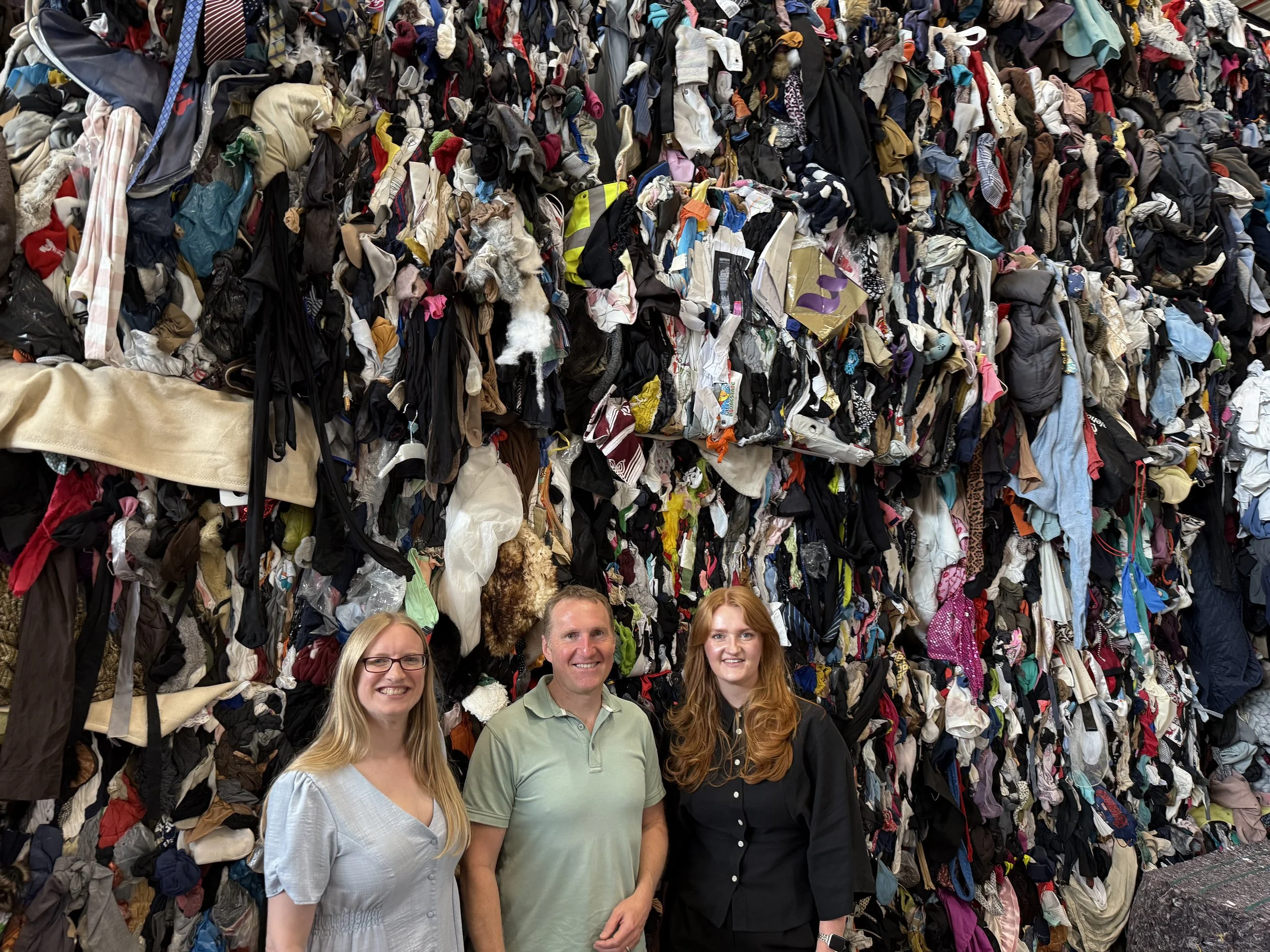
This is Frankenhuis in the Netherlands. Not a waste dump, but one of Europe’s leading mechanical textile recyclers.
Our trip to the Netherlands brought us to Frankenhuis, a world-class mechanical textile recycling facility. This is not about charity shop donations; this is heavy industry dedicated to creating a truly circular economy. This is where the circular economy gets its hands dirty to turn textile "waste" into valuable, high-tech raw materials.
Original Sorting & Input Materials Frankenhuis receives textiles from two primary sources for processing:
Post-Consumer Textiles: The collected materials that come from households and professional laundry services.
Post-Industrial Textiles: Materials that have never been used, such as production trimmings or items with quality defects.
The sorting team focuses specifically on textiles from professional laundering companies, separating workwear and linens (like towels and bed linen) to extract clean, valuable raw materials for their downstream processes. They even handle workwear and branded textiles, which are usually a major problem for recyclers. It all goes back into a closed loop, ensuring nothing leaves the facility uncontrolled.
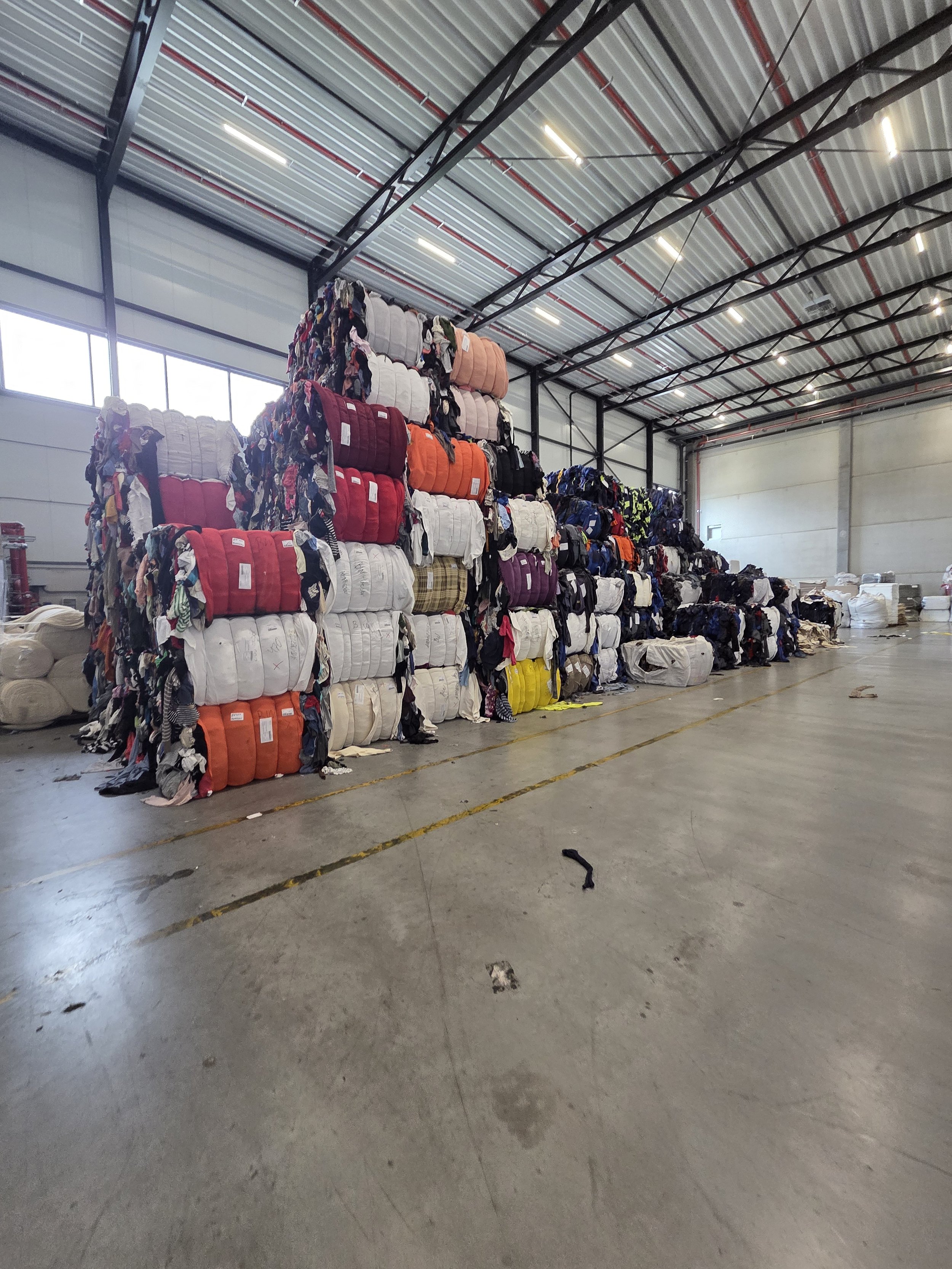
The "Original Sorting" input bales.
Contamination is the biggest threat to this circular model. We learned that for textile materials to be recycled efficiently, they must have less than 5% contamination (non-textile materials like buttons, zips, or metal). Exceeding this limit often pushes the materials into the waste category.
This is why the sorting process here is so focused on providing a pure input material. The decision on which process to use is made by selecting material primarily on the basis of structure over content. Large volumes are essential because this is an industrial process. They process 600,000 kg of post-consumer textiles monthly.
Eric’s Box of Potential
One of the highlights of the visit wasn't just the massive machinery, but the way our team looked at the "waste." Eric actually brought a box with him specifically to collect samples of what most people would throw away. We’re talking about the "contamination"—the zips, the heavy brass buttons, the steel poppers that get stripped out of garments before they are shredded.
While the machines see these as obstacles to pure fibre, Eric sees them as raw materials for profit. By collecting these metal components, he’s exploring ways to turn the "waste of the waste" into a separate revenue stream. It’s that exact mindset—refusing to see anything as "rubbish"—that defines our mission. We aren't just looking for ways to recycle; we’re looking for ways to turn every single gram of discarded material back into a resource.
The Key Processes: Fiberization & Grinding
Fiberization: Frankenhuis uses two Tearing lines. Fiberization is the core mechanical process of aggressively pulling textile materials apart to leave a pile of fibres. These fibres are then used as raw materials for various downstream industries.
Grinding: For specific materials, a separate grinding process is used. This granulates the textile material into a small, uniform fraction—a fibre of about 2mm, which looks like a powder. Importantly, the input material must be metal free , and they have systems in place to ensure this contamination is removed before grinding can commence.
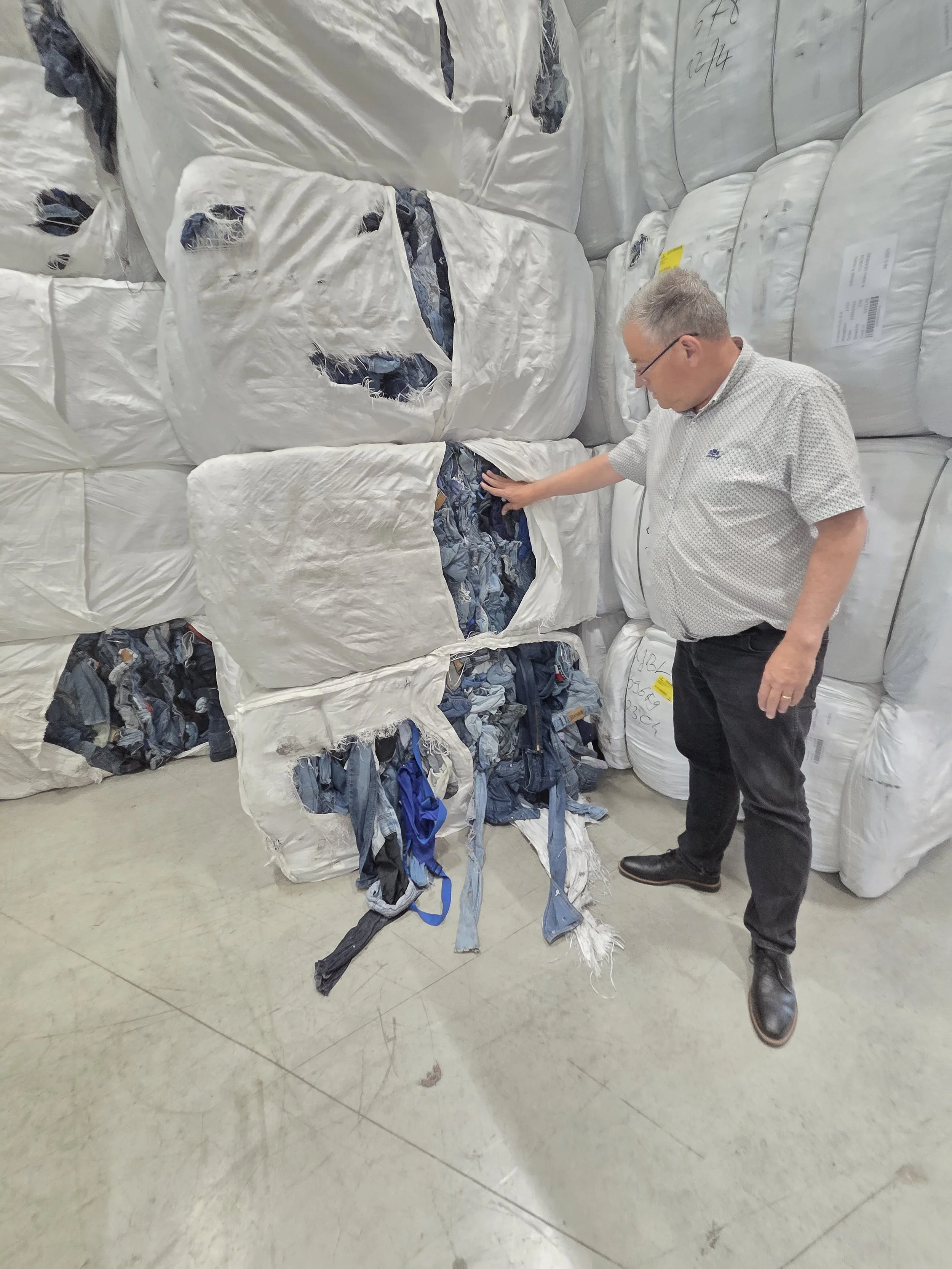
Bales of colour-sorted textiles ready for the Tearing lines
The End Products: Fibres, FFIBR®, and Powder The output of this facility is not waste; it is a range of highly customised raw materials, made based on the exacting requirements of their customers:
Fibers: The standard fibre output is used widely. We saw how they are processed into pressure distributors in furniture, acoustic insulation in white goods, and in decorative purposes such as bags and laptop sleeves. They are increasingly used in the automotive industry for things like dashboards and door panels.
FFIBR®: This is their branded product for spinnable recycled fibres. By using a less forceful opening technique during fiberization, they retain longer fibre lengths. This makes the material suitable for the spinning industry, where it can be turned into new yarn for clothing.
Powder: The product of the grinding process is a fine powder, which is essential as feedstock for the chemical textile recycling industry (to be processed into new Viscose yarns) and is also used by the paper industry (including blue jeans powder to make new paper).
Filling Material: Some textiles are only reduced to a certain size (not fully fiberized) and mixed to create filling material for pillows, poufs, and punching bags.
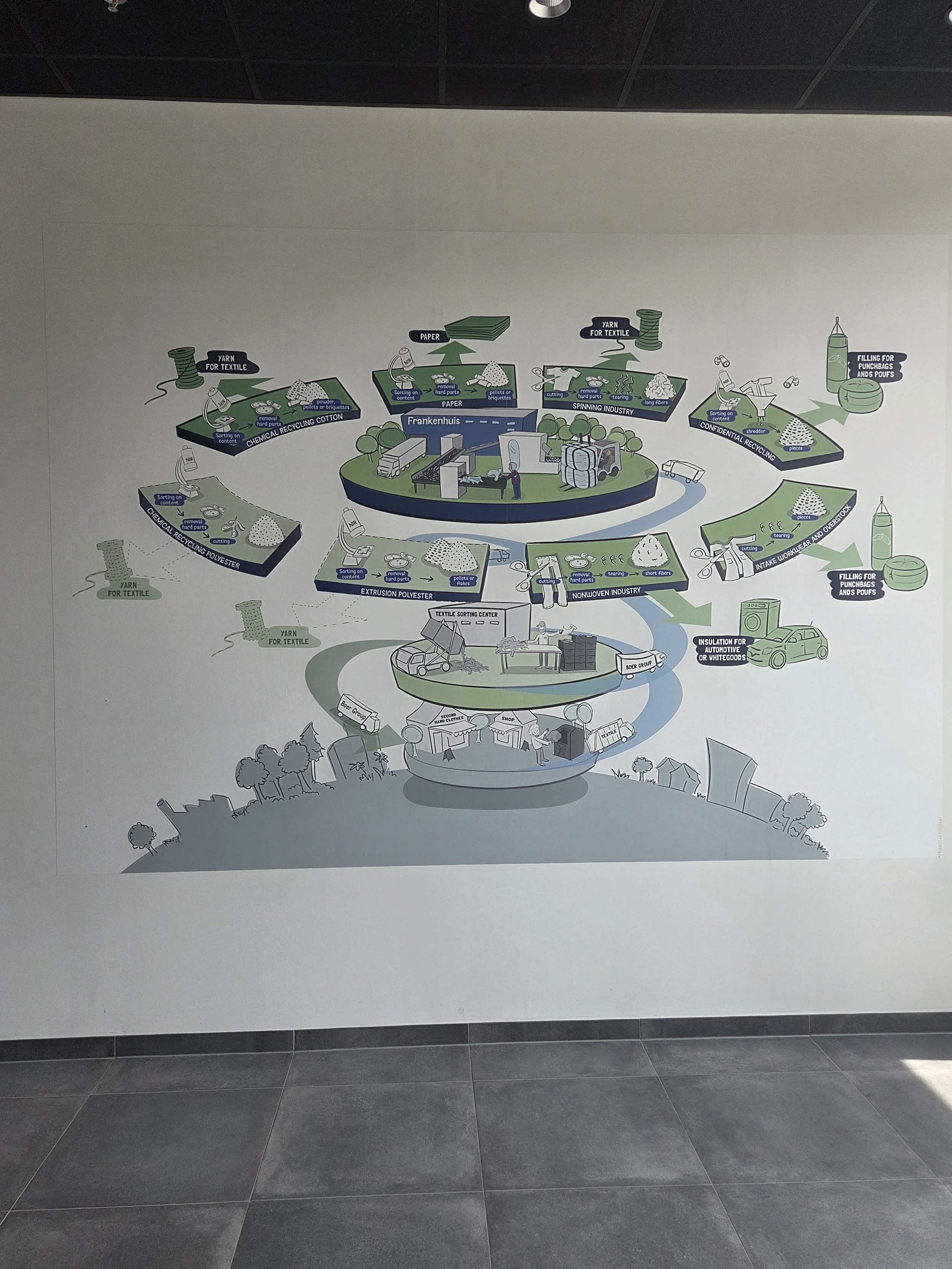
The many different end-uses for recycled Frankenhuis fibre.
Linde and Eric were telling us about how much lower the prices are now, similar to the rag trade in UK, but that honesty really stuck with us. Even the damaged textiles—the stuff that can't be reworn—still has value here. It never goes to waste. As the materials get sorted into these bales, the value drops. But the crucial thing is—it still has a value.
Frankenhuis demonstrates that with the right investment in technology and infrastructure, textiles that were once considered useless landfill can become high-value industrial inputs. This is the circular economy vision that Our Zero Selby and Shop For The Future are fighting to bring to the UK.
For more information on our trip to the Netherlands, read our blog series or watch our v-log series and check out our social media. If you’d like to read our report on our trip you can view this here, and if you’d like to help us level up the support from the Government for change in the waste and recycling industry, please do pass our High-level report to your local MP and ask them to push the movement forward.
For more information on our Shop for the Future project, read our news article or take a look at our page here.