
Thirty Years Behind? Opnieuw & Co. Shows the True Scale of Circularity
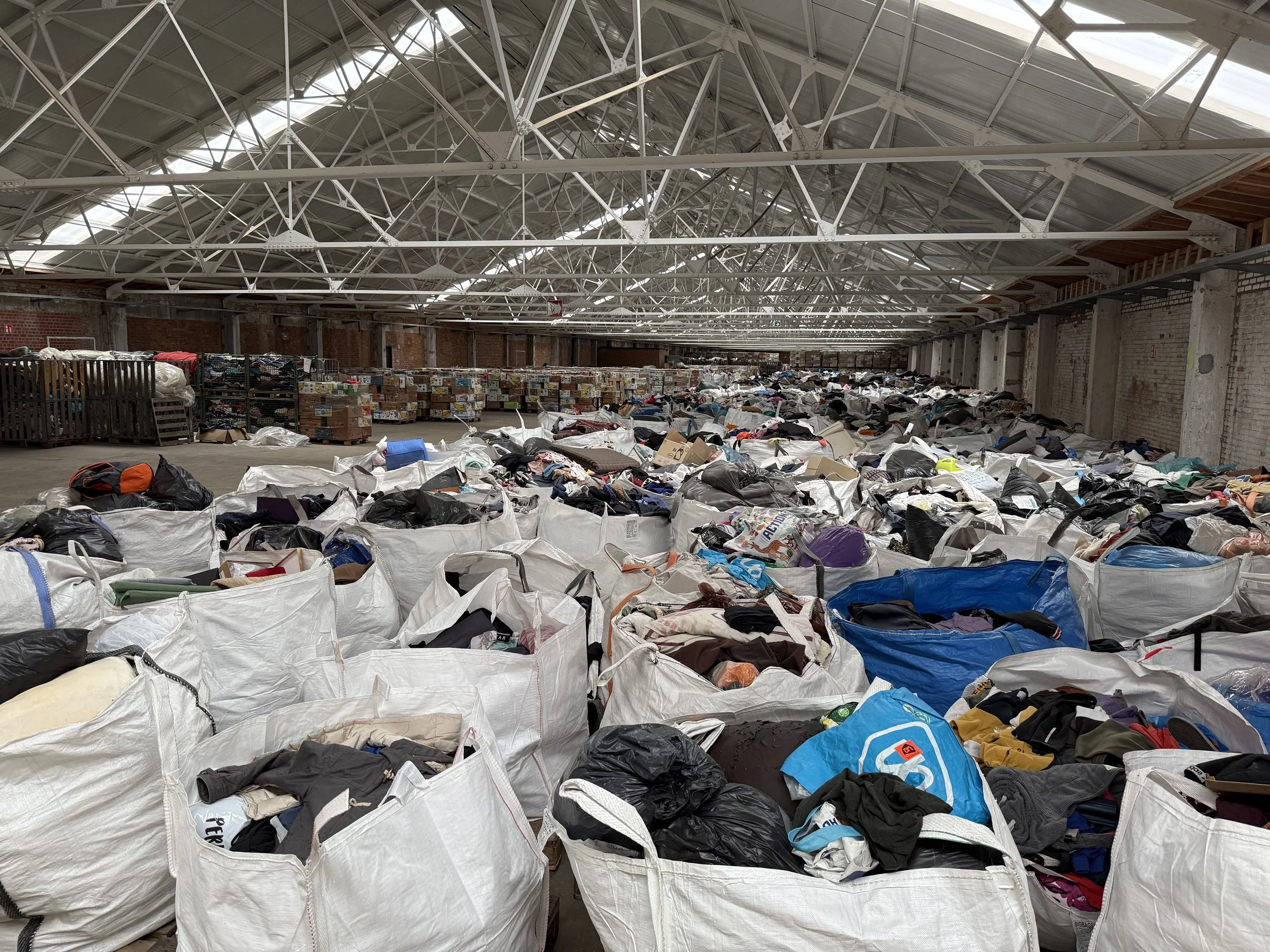
Our study tour has delivered some powerful lessons, but nothing prepared us for the sheer scale and sophistication of Opnieuw & Co. in Antwerp. If we want to move beyond token efforts and embrace a truly circular economy in the UK, we need to understand the blueprint they perfected over the last 30 years. When we saw their central sorting warehouse, covering an area the size of two football pitches (with the same again in the basement!), it hit home: we are decades behind.
The Policy & Scale: Not a Charity, but an Essential Utility
The difference starts with government policy and commitment. Opnieuw & Co. is not just a collection of Voluntary, Community, and Social Enterprise (VCSE) shops; it is the sole contracted collector for reusable waste for its region of Antwerp. This area covers a population of around 170,000—the size of a city like York—meaning they handle all contracted reusable and second-hand material, guaranteeing the necessary scale and certainty.
The confidence and long-term vision here are staggering. Opnieuw & Co. has been operating and refining its model for 30 years, providing stable employment for 500 people who are significantly distanced from the regular job market. The scale of their physical operation is immediately apparent: their main warehouse facility is the size of four football pitches across two floors. This capacity allows them to handle and process a colossal volume of material, with a goal of diverting over 10,000 tons of material annually! This guaranteed feedstock, combined with their social mission, is why they can confidently plan a multi-million Euro investment for their facilities. Their commitment to scale is evidenced by the massive initial investment secured for their spinning mill project alone, which totaled €3.2 million.
The Logistics Engine: Where Tech Meets Textiles
Walking onto that sorting floor was like stepping into an industrial future. Here’s how they turn mountains of donations into high-value revenue streams:
Sophisticated Sorting: Everything is sorted into detailed quality grades: A-grade (premium condition), B-grade (good condition), and then Designer items. Anything below that is classified as the lowest grade and is destined for either the 'last chance shop' (for one week only) or mechanical processing if unsold.
Smart Retail Replenishment: They run six other retail shops besides the main warehouse. Their inventory system automatically tracks demand and keeps inventory fresh.
Sorters use an app to scan ISBN codes for books or barcodes for clothes. The system instantly directs the sorted items to the specific shop trolley or storage trolley. This ensures that when a shop is low on, say, women's dresses or books (following a weekend sale), the system automatically ensures the correct items are crated up and sent out on the shop's trolley stand each week.
The 4-Week Cycle: Retail Genius: To prevent stagnation on the shop floor, they use a brilliant, simple mechanism: colour-coded labels. Every item is tagged with one of four colours (one colour per week). Once that colour cycle comes around again (every four weeks), any item still on the shop floor with that colour label is immediately pulled and sent to the last chance shop to be sold at a deep discount or in a 'blind bag'. This constant rotation ensures customers always see new stock, making their shops a must-visit destination.
Beyond Textiles: The scale is not just for clothes. They handle and sort various material streams: electrical waste (WEEE)—driven by Belgian government policy—as well as furniture, wood, ceramics, and glass, ensuring nothing is overlooked.
The Energy Hub: An Energy-Positive Future
Opnieuw & Co. is not satisfied just reducing waste; they are committed to becoming an energy-positive site. They are currently developing their Social Circular Hub: Number 409, which is set to house various circular and sustainable initiatives. The work underway to decouple their operation from fossil fuels is ground-breaking:
Solar Power & Storage: They installed a gigantic solar roof on their shed and store excess energy using innovative methods like refurbished car batteries from Octave Energy.
Industrial Symbiosis: Their entire site is heated by residual heat captured from the nearby Agfa Gevaert factory, a monumental example of industrial collaboration.
Seasonal Storage Research: To solve the ultimate energy problem (storing summer solar energy for winter use), they have a Powerbox from Solenco Power on-site—a hydrogen fuel cell that is investigating the long-term storage of solar energy across the seasons.
Our Zero Selby’s Takeaway
Opnieuw & Co. is proof that massive, complex circularity is possible, but it requires two things: policy-driven scale and long-term commitment. This organisation started 30 years ago—a painful reminder of how far the UK has to catch up. Their success is rooted in the government recognising the VCSE sector as the engine for both carbon reduction and social employment. We need political courage to break up the current fragmented waste market and empower large-scale VCSE organisations with long-term, guaranteed contracts like this. Circular is social, and social needs industrial-scale policy backing.
For more information on our trip to the Netherlands, read our blog series or watch our v-log series and check out our social media. If you’d like to read our report on our trip you can view this here, and if you’d like to help us level up the support from the Government for change in the waste and recycling industry, please do pass our High-level report to your local MP and ask them to push the movement forward.
For more information on our Shop for the Future project, read our news article or take a look at our page here.